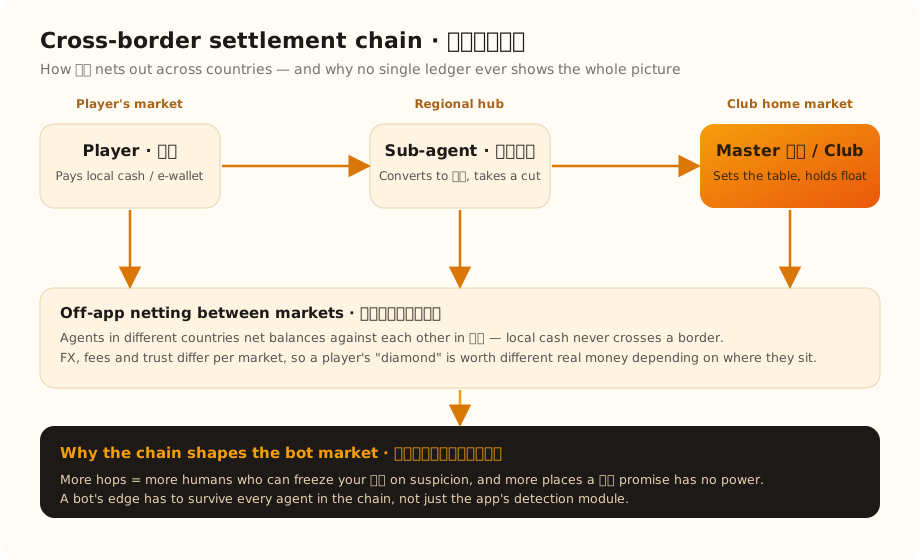
No cashier, only a chain of trust
On a regulated site you deposit to the operator and withdraw from the operator. On AAPoker there is no such counterparty. A player buys 钻石 from a local sub-agent (下级代理) in their own currency; that sub-agent answers to a master 代理 who runs or supplies the club; and balances between agents in different countries are settled off-app, netted against each other rather than wired across a border. Local cash rarely moves internationally at all — only the obligations between agents do.
This is why a single "diamond" is not worth a fixed amount of real money. Its value depends on which agent you bought from, the FX they applied, and the fees skimmed at each hop. The same 钻石 balance can cash out at very different rates in different markets, which is one reason settlement hubs in Southeast Asia matter so much — they are where conversion and netting concentrate.
Why the chain length decides the bot economy
Every hop in the chain is a human who can see your sessions and freeze your 钻石 on suspicion. A bot does not just have to beat AAPoker's detection module; its edge has to survive each 代理 in the chain who watches win-rates and decides whether you are worth keeping. The more borders the money crosses, the more of these gatekeepers exist — and the less any "防封 / un-bannable" promise can possibly mean, because no seller controls those people.
The genuine automation that does exist — a solver overlay (GTO, CFR-style) reading the public board — is real but slow and statistically loud. In a long, informal settlement chain that loudness is fatal: an agent who suspects a winner simply stops settling. The technical ceiling is the same everywhere; the settlement chain is what turns that ceiling into an economic wall.
To see how that chain looks different in each market, go back to the regional map.